
What does leadership look like when it emerges from years of teaching, research and service rather than a deliberate career ambition?
For Professor Rohama Gill, it meant moving beyond the laboratory and lecture theatre to lead people, influence institutional change and shape the experience of hundreds of students.
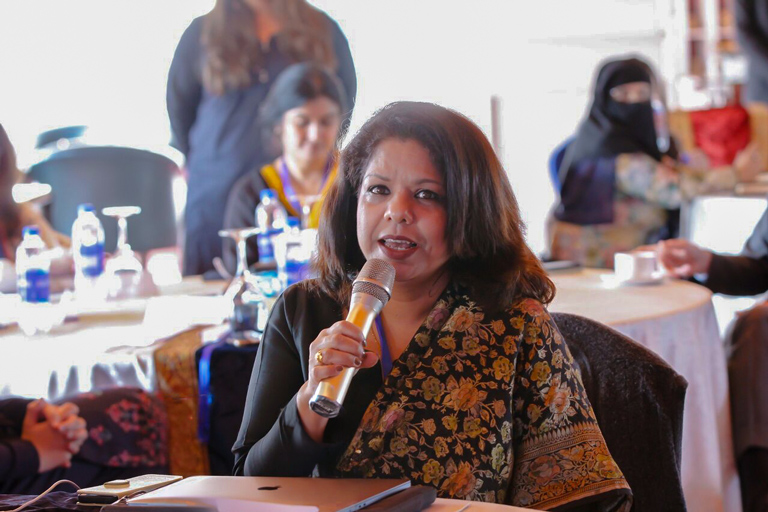
Today, Professor Gill serves as Provost of the hostels at Fatima Jinnah Women University (FJWU) in Pakistan, overseeing accommodation that supports around 900 students. Yet her leadership journey began not with a management appointment, but with a distinguished academic career built on expertise in environmental sciences.
A Professor of Environmental Sciences at FJWU, Professor Gill holds a PhD in Chemistry and has established herself as a respected researcher and educator. Her work spans environmental chemistry, polymer science, nanofabrication and renewable energy, and she has spent years teaching, mentoring students and contributing to scientific research.
Despite these achievements, stepping into leadership was not something she initially envisioned for herself.
"I would never have imagined becoming a Provost one day, as I had always shied away from taking on such significant responsibilities," she said.
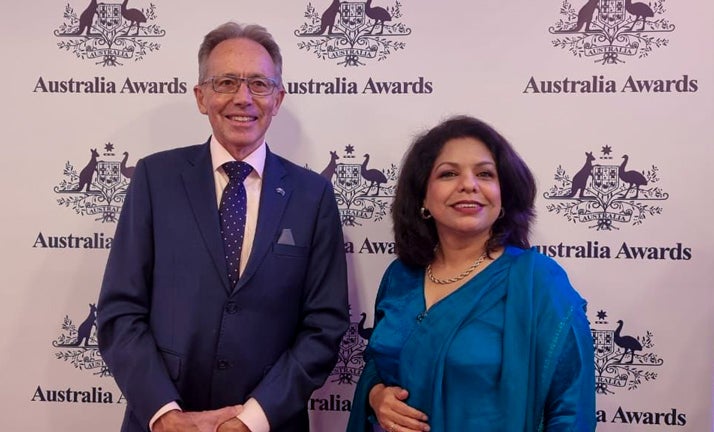
That began to change in 2024 when Professor Gill travelled more than 11,000 kilometres from Islamabad to Brisbane to participate in The University of Queensland's Women in Executive Leadership Development (WELD) Short Course.

Delivered by UQ International Development through Australia Awards South Asia and Mongolia, the program brought together women leaders from Pakistan to strengthen their leadership capability through online learning and an intensive study component in Australia.
For Professor Gill, the course provided more than new leadership frameworks. It helped her recognise that the qualities needed for leadership were already present.
"The WELD course was very helpful in polishing my decision-making and my ability to understand and judge various situations that I've been assigned now," she said.
"We were introduced to adaptive leadership, which was very helpful. It taught me that we have to control the sails and make decisions in uncertain situations."
As new administrative responsibilities emerged, she found herself applying those lessons in increasingly complex situations, balancing institutional requirements with the needs of students and colleagues.
One defining example involved a prospective master's student who uses a wheelchair and was seeking admission to the Master of Environmental Sciences program.
While concerns were raised about the accessibility of laboratories and fieldwork requirements, Professor Gill focused on what the student could achieve rather than the barriers she might face. She advocated for practical solutions, including accessible research arrangements and infrastructure improvements that would enable the student to participate fully in the program.
"She doesn't need sympathy, she needs inclusion," Professor Gill said.
"I could see the spark in her eyes and her passion for working on environmental issues during the admission interview."
The student was admitted and successfully completed her first semester. The process also prompted the construction of a new ramp within the department, improving accessibility for future students.
For Professor Gill, the experience highlighted an important lesson about leadership.
"WELD taught me that leadership requires a balance between empathy and accountability. We must understand people's circumstances, but we must also be prepared to make responsible decisions," she said.
"That is the point where true leadership actually emerges."
The confidence gained through experiences like these helped pave the way for her appointment as Provost in October 2025.
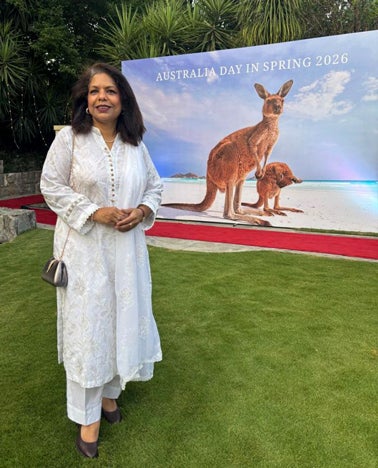
In the role, Professor Gill now leads initiatives that affect students across the university community. She is helping improve digital infrastructure within the residential system, contributing to institutional efforts around harassment prevention and reporting, and fostering stronger educational links between Pakistan and Australia.
At the same time, she continues her academic work while mentoring early-career female academics, encouraging them to develop the confidence to lead and advocate for themselves.
Her story reflects a broader reality about leadership development. Often, leadership is not about becoming someone different. It is about recognising existing strengths, finding the confidence to act on them and being prepared to step forward when opportunities arise.
"That experience helped me translate my learning into real leadership, grounded in commitment, continuous learning and a desire to create meaningful impact," Professor Gill said.
From accomplished researcher and educator to university leader responsible for the wellbeing and experience of hundreds of students, Professor Rohama Gill's journey demonstrates how leadership can emerge from expertise, purpose and the confidence to use one's voice.


